
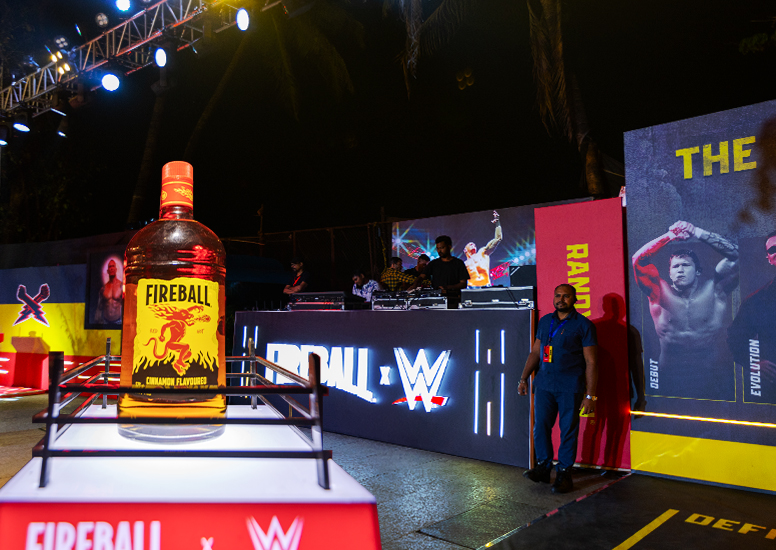
Most brands do not have a marketing problem.
They have an attention problem.
People already see hundreds of ads, reels, banners, notifications, promotional emails and sponsored posts. Running one more advertisement does not automatically make a brand memorable.
Sometimes a billboard is enough.
Sometimes people need to touch the product.
Sometimes they need to play with it.
Sometimes the marketing itself needs to become something people stop to photograph.
And sometimes the best marketing idea is not an advertisement at all—it is an experience.
That is where brand activation, experiential marketing, creative OOH advertising, outdoor marketing, product experiences and on-ground marketing become powerful.
The objective is simple:
Do not only make people see the brand. Give them a reason to notice, experience, remember and talk about it.
This guide covers some of the best brand activation ideas and creative marketing ideas for real estate, automobiles, FMCG, consumer electronics, entertainment, luxury brands, retail and other industries.
What Makes a Brand Activation Idea Actually Good?
Before discussing creative ideas, there is one important thing to understand.
A huge installation is not automatically a great campaign.
AR is not automatically innovative.
A celebrity appearance is not automatically effective.
A viral-looking billboard is not automatically good outdoor advertising.
The best activation is the one where these elements connect:
Right Audience + Right Location + Right Idea + Right Experience + Right Objective
Ask five questions before developing the creative:
- Who exactly needs to notice this brand?
- Where does that audience naturally spend time?
- What can make them stop?
- What should they understand or feel after interacting?
- What action should happen next?
Once these answers are clear, choosing between a billboard, pop-up, sampling activity, roadshow, projection mapping campaign, interactive installation or experiential event becomes much easier.
1. Creative OOH Advertising That Becomes Part of the Environment
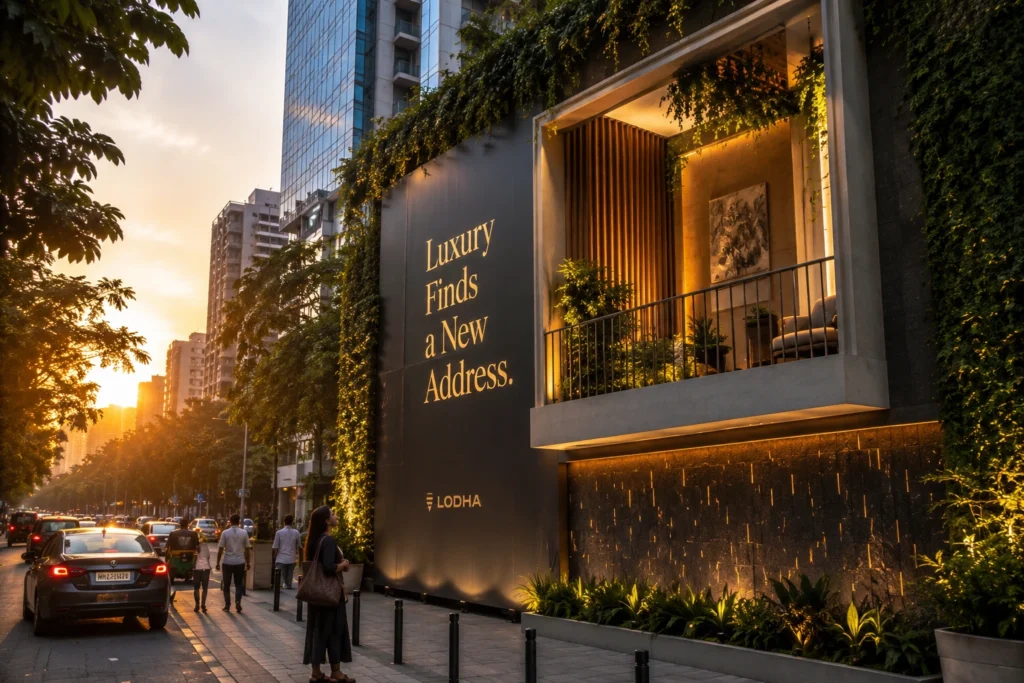
A billboard does not always need to look like a rectangular advertisement.
The city itself can become part of the creative.
A building, road, bridge, tree, bus shelter, pavement, mall façade, transit location or street corner can influence the concept.
This is where creative OOH advertising becomes more powerful than simply buying a large media space.
Instead of asking:
What should be printed on the billboard?
Ask:
What can this location allow the brand to do?
A strong outdoor campaign might use:
- Oversized product installations
- Forced perspective
- Extensions outside the billboard frame
- Sculptural OOH
- Building wraps
- Interactive outdoor installations
- Creative transit advertising
- Contextual billboards
- Ambient media
- Landmark installations
- 3D anamorphic DOOH
- Product replicas
- Optical illusions
- Experiential OOH
The objective is to make the advertisement feel like it belongs to that particular location.
That is important because creative OOH campaigns increasingly earn attention not just because of their media size, but because they cleverly use their surroundings and cultural context.
Best for
Automotive, entertainment, fashion, FMCG, technology, real estate, OTT platforms, consumer brands and major product launches.
2. Luxury Real Estate Marketing: Sell the Feeling Before Selling the Floor Plan
Consider a ₹3 crore, ₹5 crore or premium luxury property.
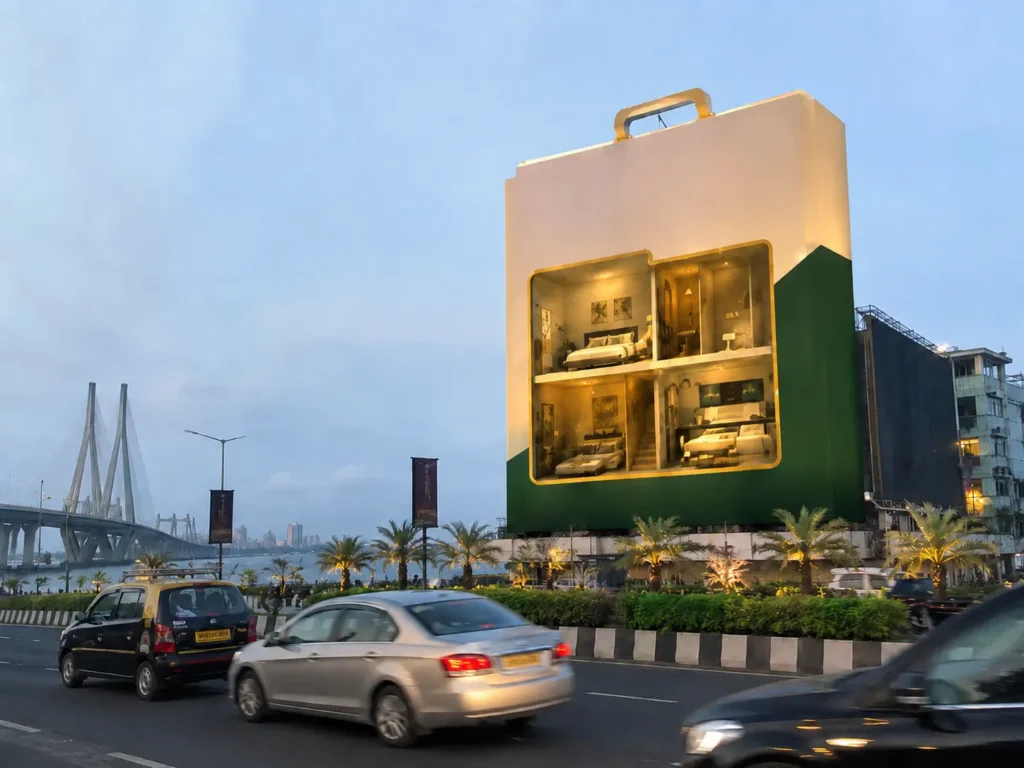
The target customer is not everybody.
That completely changes the marketing strategy.
Instead of thinking only about maximum impressions, the more useful question is:
Where are the people who can genuinely consider this property?
That may include:
- Premium business districts
- Corporate parks
- Luxury malls
- Golf clubs
- Airports
- Premium residential neighbourhoods
- Financial districts
- Five-star hospitality locations
- High-end automobile showrooms
- Executive networking events
- Premium lifestyle events
That is where strategic OOH marketing for real estate can become extremely effective.
But the billboard should also look like the property it represents.
Luxury cannot be communicated through clutter.
A powerful luxury-property outdoor campaign can use architectural lighting, premium materials, landscaping, dimensional elements, scale-model installations or even a life-sized representation of a balcony, room or façade.
Make people imagine:
“What would living here actually feel like?”
Residential property is not only concrete, carpet area and amenities.
It represents a home.
And home is emotional.
Instead of showing twenty features on one hoarding, the campaign can communicate one strong feeling:
This could be your next address.
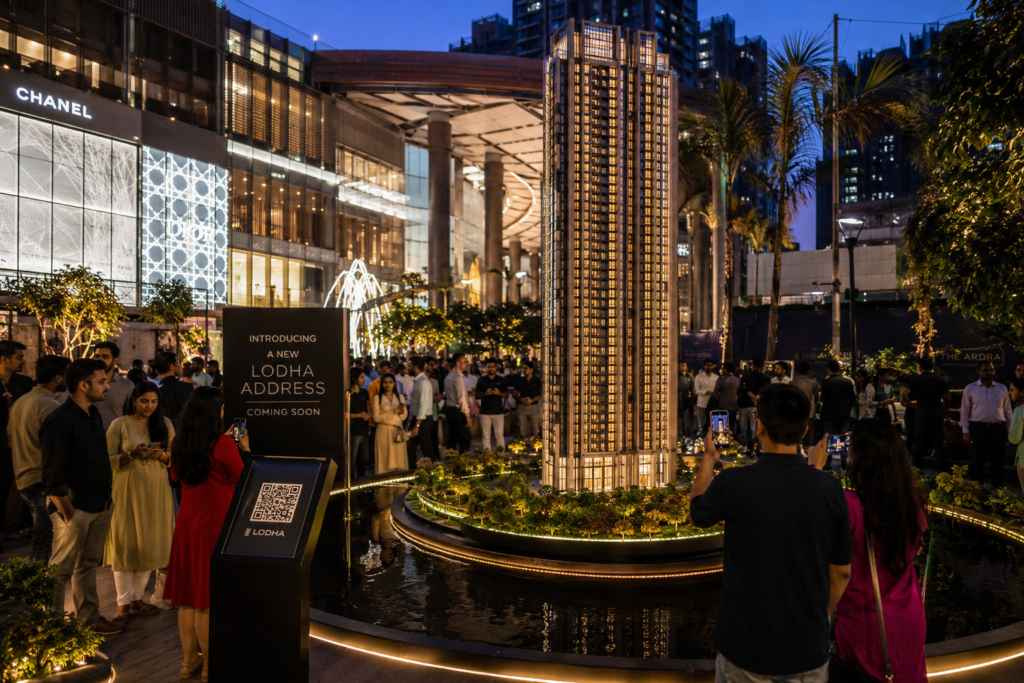
3. Turn a Real Estate Model into an Experience
A miniature building model inside a sales office is expected.
Putting it where your potential buyers already spend their time is different.
Imagine a beautifully illuminated architectural model installed temporarily at a premium business event, luxury mall, members’ club or high-end networking evening.
Now the project is no longer waiting for people to visit the sales gallery.
The project has travelled to the audience.
The experience can include:
- Interactive masterplan
- Touchscreen property exploration
- Digital apartment selector
- AR property visualization
- VR walkthrough
- Holographic building presentation
- Investment consultation
- Location map
- Amenities visualization
- QR-based brochure
- Private site-visit booking
This transforms real estate brand activation from a sales stall into a premium property experience.
4. Create an Exclusive Networking Experience Around the Brand
High-value audiences usually value one thing heavily:
their time.
So simply inviting business leaders, entrepreneurs, investors or senior executives to hear a sales presentation may not be enough.
Give them another reason to attend.
Create a private:
- Business networking evening
- Investment discussion
- Luxury preview
- Founder dinner
- Art and architecture evening
- Golf event
- Business leadership session
- Premium lifestyle experience
The property can remain naturally integrated into the environment.
This is an important principle of experiential marketing:
The brand does not always have to shout the loudest. Sometimes it simply has to create the environment people want to be part of.
For community and cultural activations in particular, current experiential thinking increasingly favors brands adding genuine value to the experience rather than forcing themselves into the centre of it.
5. Automotive OOH: Take the Vehicle Out of the Rectangle
Cars are physical products.
So why should automobile advertising always remain flat?
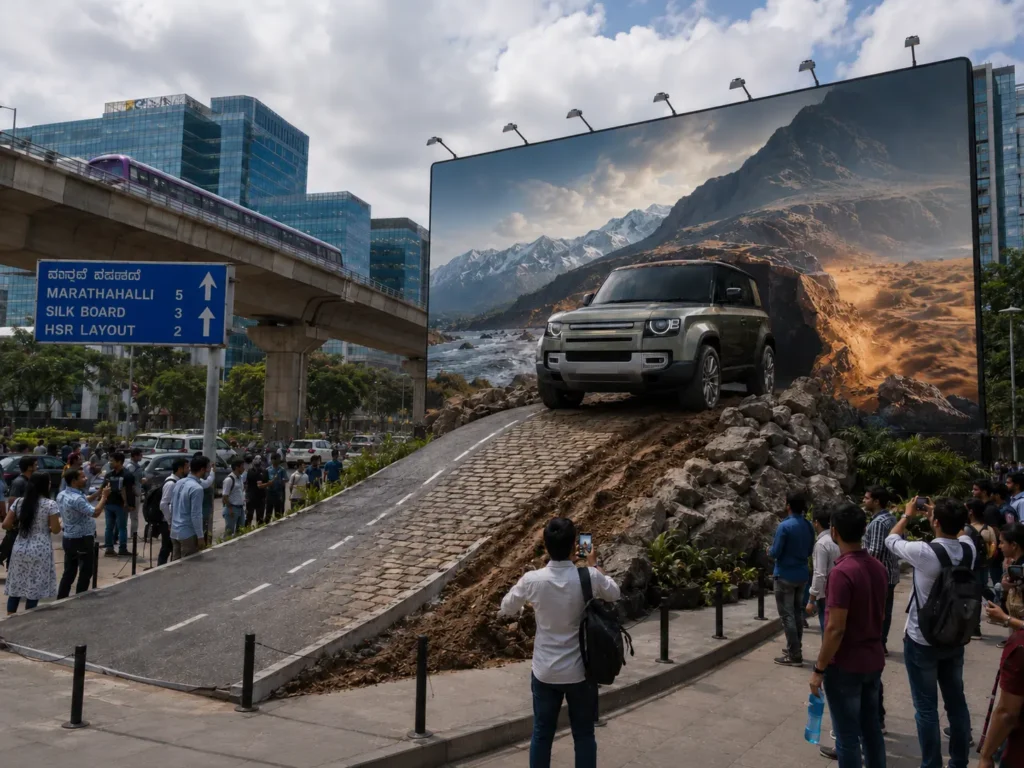
Instead of simply printing an SUV driving through mountains, the outdoor installation itself can recreate part of that terrain.
Imagine:
- A vehicle positioned on artificial rocks
- An SUV climbing a fabricated incline
- A car seemingly breaking through a billboard
- An EV installation surrounded by responsive lighting
- A transparent automobile display
- An oversized charging installation
- A vehicle displayed against an immersive landscape
This is creative automotive OOH because the medium demonstrates positioning rather than simply describing it.
For an off-road SUV, communicate capability.
For an EV, communicate technology.
For a sports car, communicate performance.
For a luxury vehicle, communicate status.
The product should become the advertising.
6. Automobile Launch Events That People Want to Record
If the target audience includes younger consumers, enthusiasts, creators and Gen Z, do not build an automobile launch around speeches alone.
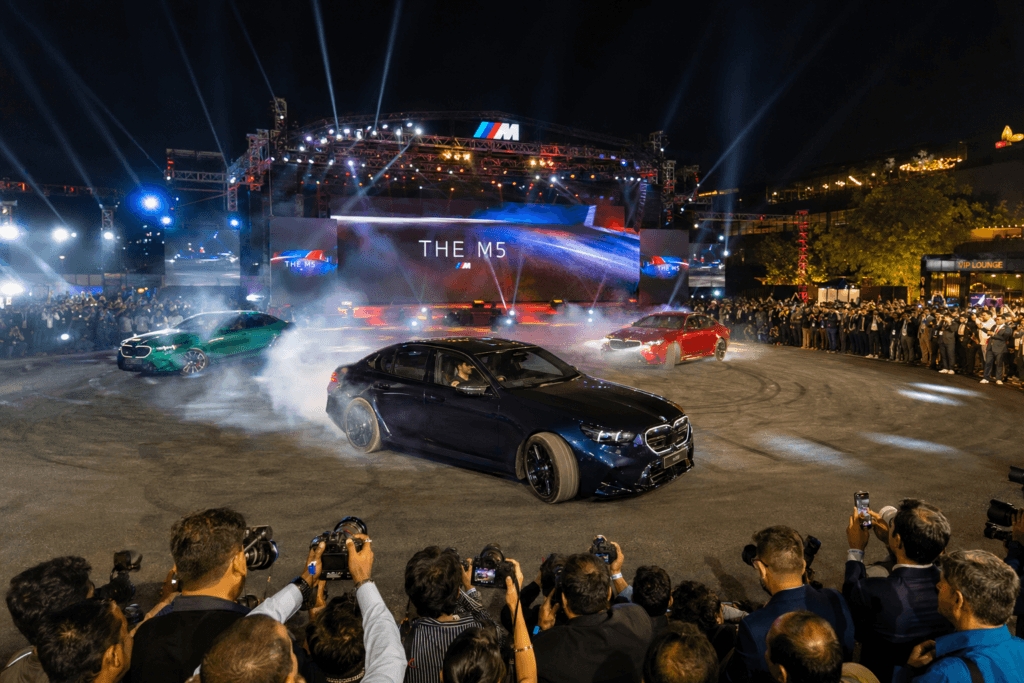
Build a spectacle.
Think about:
- Drift performances
- Precision driving
- Racetrack experiences
- Test-drive challenges
- Projection-mapped car reveals
- Interactive LED tunnels
- Light and laser reveals
- Motorsports experiences
- Gaming integrations
- Simulators
- Creator zones
- Performance demonstrations
The moment should naturally make people lift their phones.
That gives the campaign two audiences:
People physically attending the activation
and
people watching the content created from it online.
That combination is one of the most useful principles in modern experiential marketing:
design offline experiences that can travel online.
7. Build Experiences Around the Product Feature
A creative activation should not distract from the product.
Ideally, the activity helps people understand the product.
For example, an automobile brand promoting braking technology could create a reaction-time game.
A smartphone company promoting camera performance could build a photography challenge.
A sportswear brand could test speed or movement.
A gaming laptop could be experienced through a tournament.
A speaker company could create an immersive sound room.
A television brand could create a cinematic content zone.
This approach is stronger than simply printing the product feature on a panel.
The visitor discovers the benefit by participating.
8. Premium Automobile Exhibitions and Private Showcases
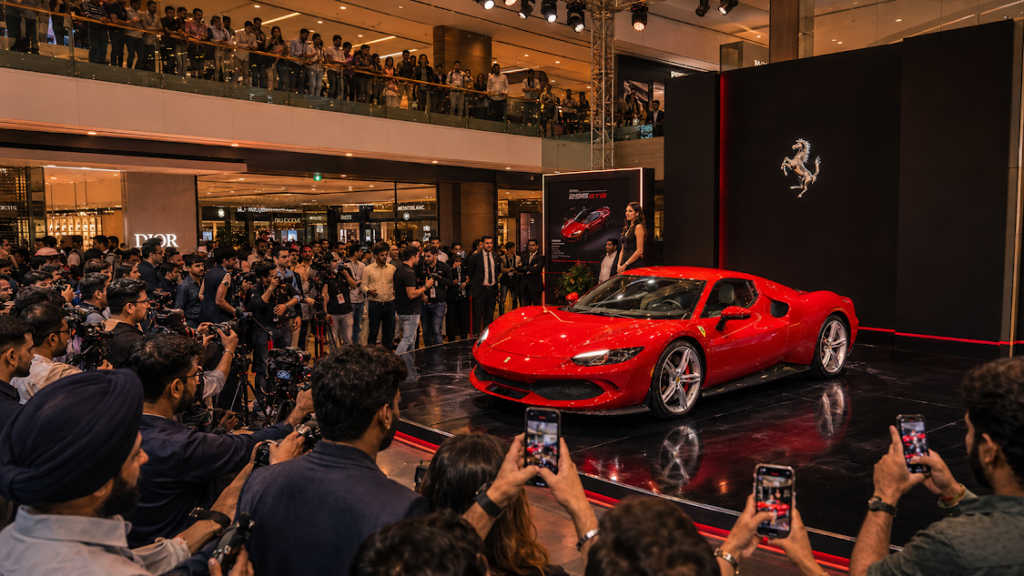
For luxury automobiles, mass footfall is not always the most useful metric.
Sometimes 300 highly relevant people are more valuable than 30,000 random visitors.
A private automobile experience could include:
- Vehicle preview
- Test drive
- Fine dining
- Art showcase
- Luxury watch collaboration
- Fashion partnership
- Golf experience
- Business networking
- Collector meet
- Motorsport evening
Luxury marketing often works better when access feels intentional.
The experience creates aspiration around the vehicle rather than simply presenting specifications.
9. FMCG Sampling: Do Not Just Hand People a Product
Sampling remains one of the simplest forms of brand activation.
But there is a major difference between:
Take this free sample.
and
Earn, discover or experience this product.
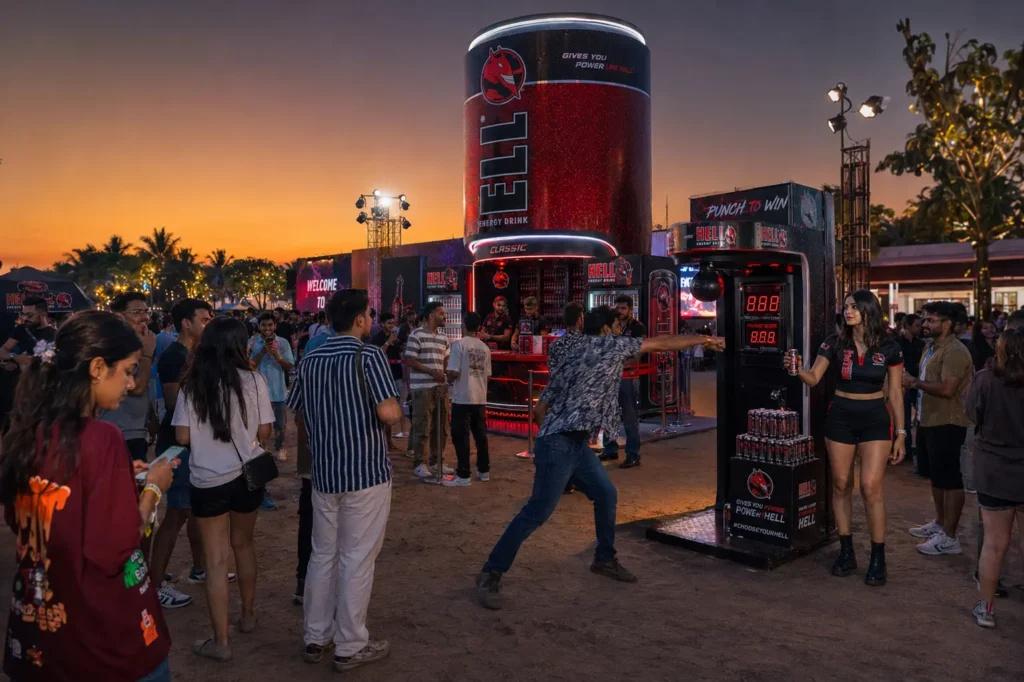
Instead of placing promoters with trays, turn sampling into an activity.
For example:
Energy Drink
Complete a reaction challenge.
Sports Drink
Hit a speed or strength score.
Snack Brand
Complete a fun taste challenge.
Ice Cream
Unlock a flavour through a game.
Beauty Product
Complete a quick personalized consultation.
Beverage Brand
Create your own flavour combination.
The product becomes the reward.
Good experiential sampling can increase product trial, encourage conversation and generate more memorable interactions because consumers experience the product directly rather than only hearing promotional claims.
10. Gamification: Let People Earn the Sample
People enjoy participation even when the game itself is simple.
Possible gamified brand activation ideas include:
- Reaction games
- Punching machines
- Cycling challenges
- Basketball challenges
- Football accuracy games
- Racing simulators
- Memory games
- Spin-to-win
- Digital quizzes
- Treasure hunts
- Motion games
- AR games
- Claw machines
- Leaderboards
- Product knowledge games
- Gesture-controlled games
The important part is not adding a game for decoration.
Connect it with the product story.
A sports drink should ideally involve movement.
A gaming product should involve gaming.
A camera should involve content creation.
A skincare brand could involve personalized discovery.
That connection is what turns a generic activity into a brand activation.
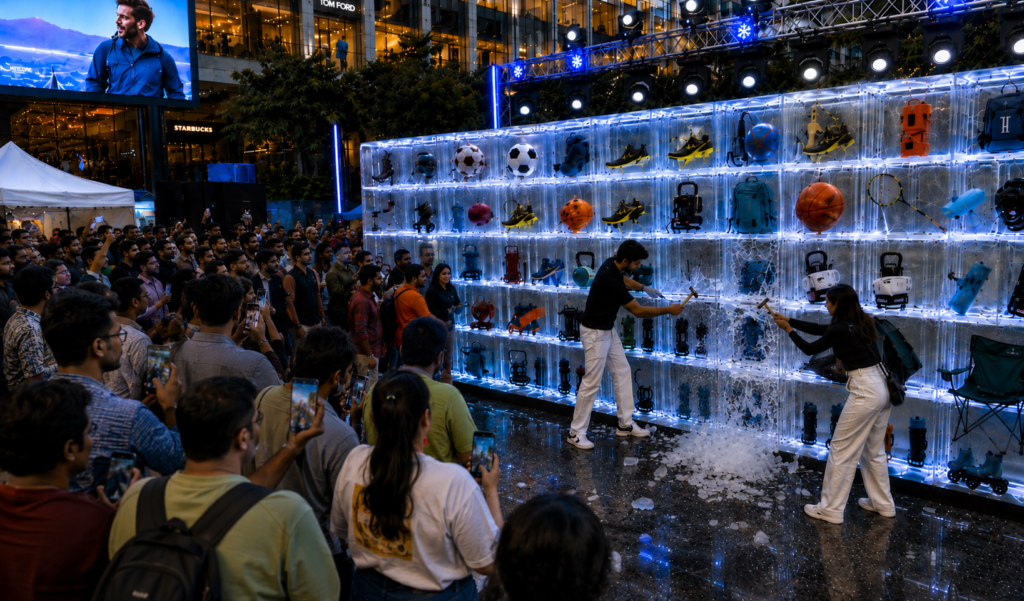
11. Turn Sampling Into a Social Challenge
A small activation can achieve a much larger reach when participation naturally produces content.
For example:
Play → Win → Receive Product → Capture Moment → Share
A branded content station can automatically generate:
- Slow-motion videos
- GIFs
- Photos
- AI portraits
- AR videos
- Boomerangs
- Personalized posters
- Short reels
The participant gets something worth keeping.
The brand gets content that can travel beyond the physical activation.
12. Pop-Up Brand Experiences
Sometimes the best activation is to temporarily create a small world around the product.
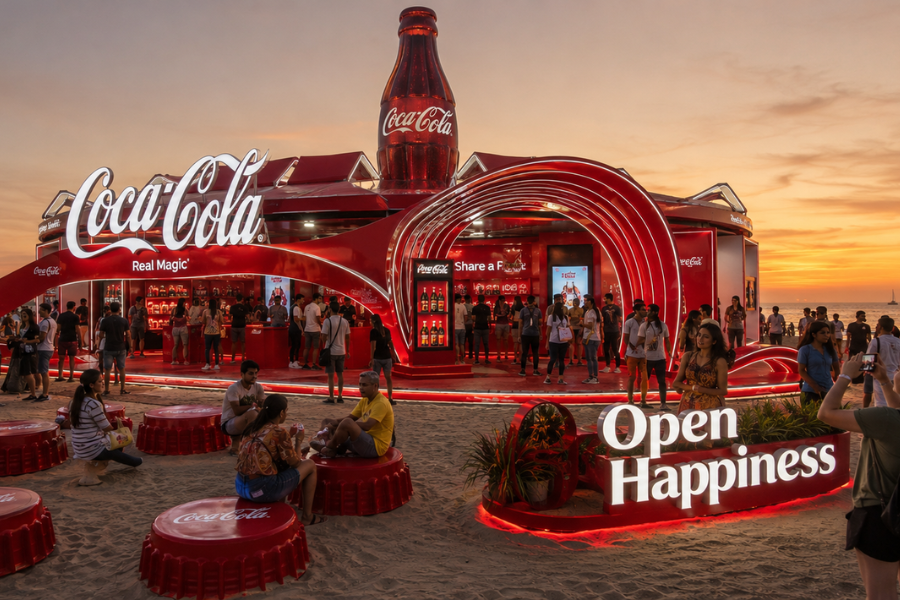
A brand pop-up experience can be installed at:
- Shopping malls
- Airports
- Business districts
- Festivals
- Colleges
- High streets
- Exhibitions
- Corporate parks
- Tourist destinations
Instead of a promotional stall, think of it as a temporary physical expression of the brand.
A strong pop-up can contain:
Discover → Experience → Participate → Create → Purchase
Possible components include:
- Product demo
- Sampling
- Interactive installation
- Customization station
- Games
- Photo experience
- Influencer appearance
- Limited-edition merchandise
- Retail counter
- Lead capture
Current activation formats are increasingly combining immersive environments, hands-on product experiences and social-content opportunities rather than treating these as separate activities.
13. Mall Activation Ideas
A mall gives brands something extremely valuable:
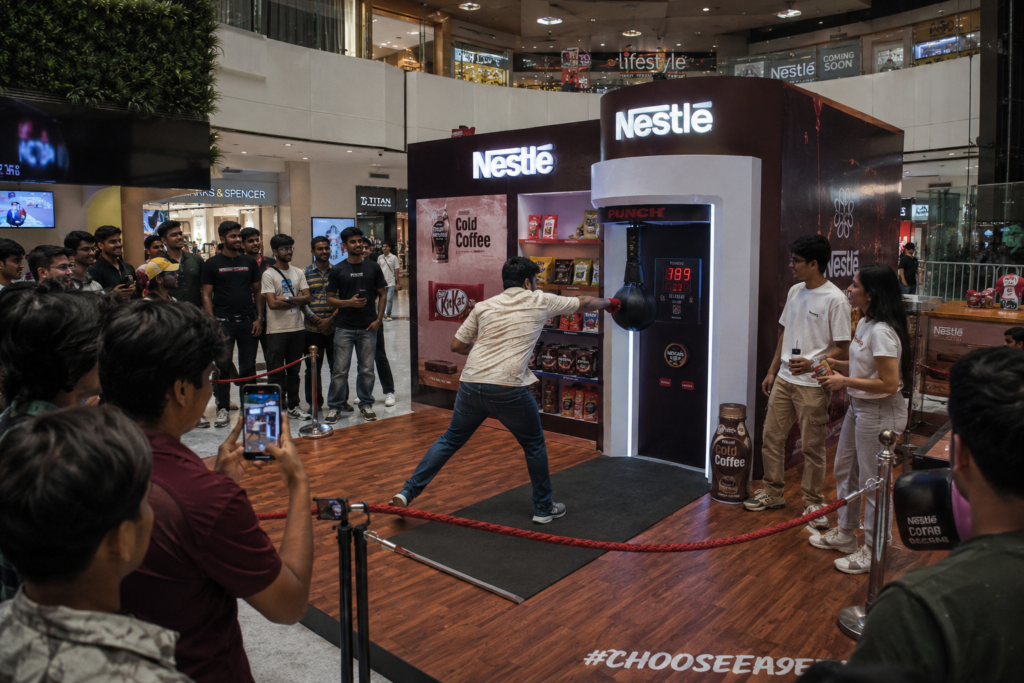
existing footfall.
But footfall is useful only when people stop.
Some effective mall activation ideas include:
- Giant product replica
- Interactive LED floor
- AR mirror
- AI photo booth
- Product trial station
- Motion-controlled game
- Digital competition
- Personalization counter
- VR experience
- Sampling bar
- Mini sports arena
- Interactive vending machine
- Live performance
- Creator studio
- Product demonstration
Design the activation so someone passing from twenty metres away can understand that something interesting is happening.
The first job is attraction.
The second is interaction.
14. Consumer Electronics: Let People Touch the Technology
Technology is difficult to sell through adjectives.
“Faster.”
“Smarter.”
“More immersive.”
“Better performance.”
People have heard these words many times.
Instead, let them test the difference.
For consumer electronics brand activation, consider:
- Hands-on product demo zone
- Gaming tournament
- Camera challenge
- VR experience
- Smart-home simulation
- AI demo station
- Creator studio
- Product comparison challenge
- Interactive feature wall
- AR demonstration
- Live technology lab
A good product activation transforms specifications into experiences.
Instead of saying:
This camera performs well in low light.
Build a low-light photography zone.
Instead of saying:
This laptop is powerful for gaming.
Run a gaming challenge.
Show the claim.
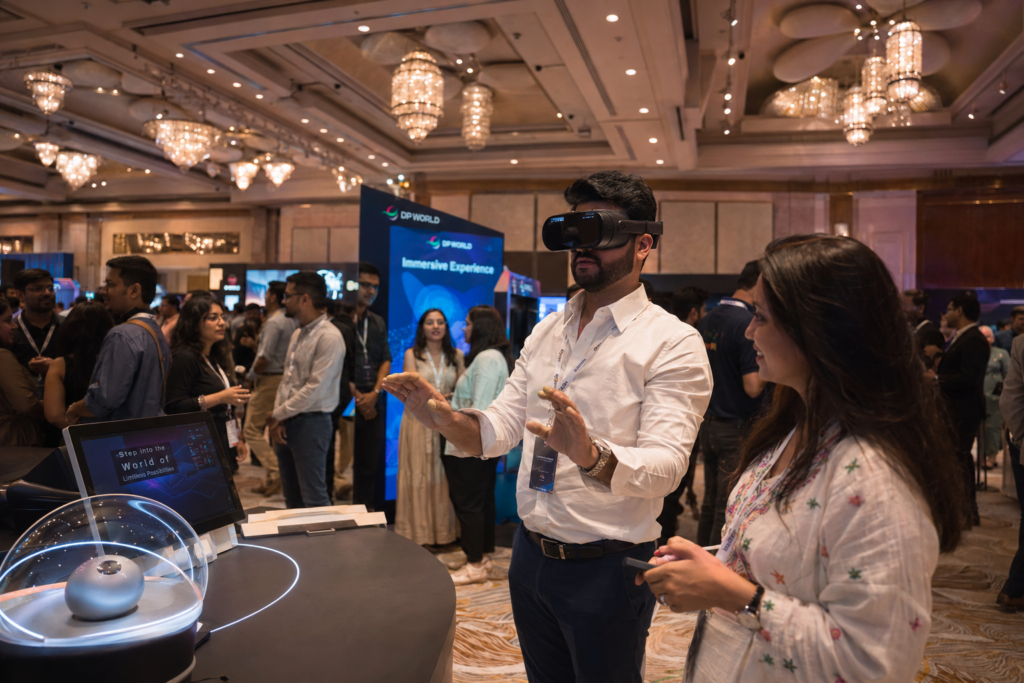
15. Product Launch Experience Zones
For a game, app, gadget, electronics product or new technology platform, an exhibition-style launch can work extremely well.
Create different zones where each area introduces one part of the product.
For example:
Zone 1 — Discover
What is the product?
Zone 2 — Experience
Try the main feature.
Zone 3 — Compete
Participate in a challenge.
Zone 4 — Create
Generate branded content.
Zone 5 — Convert
Pre-order, register or buy.
This gives visitors a journey instead of presenting everything at once.
16. AR Brand Activation
Augmented reality works well when the physical product cannot demonstrate everything by itself.
Possible AR marketing ideas include:
- Virtual try-on
- AR product visualization
- AR treasure hunt
- Interactive packaging
- AR photo experience
- Product feature visualization
- AR games
- Virtual characters
- Spatial storytelling
The key rule:
Do not use AR only because AR sounds innovative.
Use it when it adds something that cannot be experienced as effectively through a normal installation.
17. VR Brand Experiences
Virtual reality can be especially useful when the real experience is:
- Too large
- Too expensive
- Too far away
- Too dangerous
- Still under construction
- Impossible to transport
That makes VR useful for:
- Real estate walkthroughs
- Automobile simulation
- Travel marketing
- Gaming
- Industrial products
- Education
- Training
- Tourism
- Entertainment
- Product demonstrations
The consumer should not simply wear a headset.
The surrounding physical space should support the experience as well.
18. AI-Personalized Brand Experiences
AI can transform a mass activation into something that feels individual.
Instead of every participant receiving the same output, the activation can generate something specifically for them.
Examples include:
- AI-generated campaign posters
- Personalized avatars
- AI photo transformations
- Product recommendations
- Custom videos
- Personalized messages
- Virtual stylists
- Beauty recommendations
- Travel recommendations
- AI characters
- Customized product visualizations
Personalization gives people another reason to save and share the content.
But the same rule applies here:
Technology should support the idea—not become the idea.
19. Giant Product Installations
Few creative formats communicate quickly outdoors as well as scale.
Make something familiar unexpectedly huge.
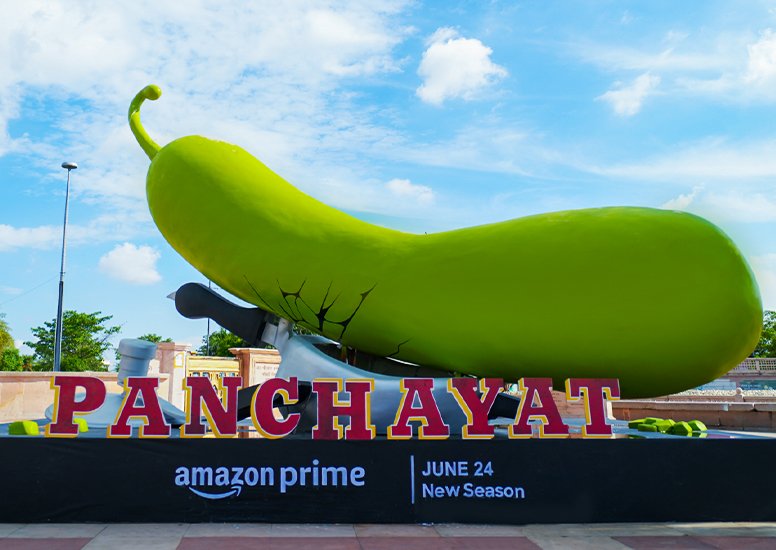
A giant:
- Shoe
- Bottle
- Smartphone
- Food item
- Shopping bag
- Cosmetic product
- Character
- Car component
- Package
- Entertainment prop
can immediately become a landmark.
People already understand the object.
The unusual scale creates the surprise.
That is why giant installations work particularly well for outdoor brand activation, movie marketing, FMCG advertising and product launches.
20. Create an Installation People Want to Photograph
There is a simple question creative teams can ask:
Would someone photograph this even if they were not being paid to?
If the answer is yes, the installation has a much stronger chance of organic amplification.
People photograph:
- Unexpected scale
- Optical illusions
- Beautiful design
- Humour
- Interactive elements
- Surprises
- Celebrity or entertainment references
- Spectacular lighting
- Personalization
- Cultural relevance
Do not place an Instagram icon beside an ordinary wall and call it “Instagrammable.”
Make the installation genuinely worth photographing.
21. Projection Mapping for Brand Awareness
A building can become a screen.
A stage can change architecture.
A monument-like structure can appear to move.
A product can visually transform.
That is the advantage of projection mapping advertising.
Projection mapping can work particularly well for:
- Movie promotion
- OTT launches
- Product launches
- Automobile reveals
- Corporate events
- Tourism
- Destination promotion
- Public awareness campaigns
- Entertainment launches
- Large-format storytelling
The PDF example itself points toward this approach, describing public projection mapping as an awareness format and emphasizing setups that can tell a story.
The important word here is story.
Do not use projection mapping simply to project a logo for five minutes.
Use the architecture.
Build anticipation.
Create movement.
Reveal something.
Tell a short visual story people understand even without audio.
22. 3D Anamorphic Billboard Advertising
Digital OOH can go beyond running conventional videos on LED screens.
With properly designed anamorphic content, the screen can create the illusion that an object has depth or is moving beyond its physical boundary.
Possible ideas include:
- Product breaking out of screen
- Character interaction
- Giant product reveal
- Mechanical transformation
- Optical illusion
- Cinematic environment
- Countdown launch
Anamorphic OOH can be particularly effective at high-footfall premium locations because the display itself becomes entertainment.
But the concept should remain understandable.
A technically complex animation that nobody understands is less effective than one simple visual illusion people remember.
23. Interactive Digital OOH
Why should an outdoor screen behave exactly like television?
Interactive DOOH can respond to:
- Movement
- Touch
- Gestures
- Weather
- Traffic
- Time
- Location
- Audience interaction
- Live data
Examples:
A beverage ad changes when the temperature rises.
A sports screen reacts when someone jumps.
A digital billboard changes when pedestrians move.
A campaign updates depending on local events.
This makes digital OOH advertising feel connected to the real world instead of simply playing another video.
24. Roadshow Marketing
If the audience is spread across multiple markets, take the experience to them.
A branded roadshow vehicle can function as:
- Mobile product showroom
- Sampling station
- Gaming zone
- Demo centre
- Mobile studio
- Exhibition space
- Retail unit
- Lead-generation centre
A roadshow can move through:
- Metro cities
- Tier-2 cities
- Colleges
- Corporate parks
- Retail markets
- Residential communities
- Dealer networks
- Rural markets
This makes roadshow marketing useful for brands that want controlled execution across multiple locations.
25. Community and Residential Society Activations
Not every campaign needs a landmark location.
Sometimes proximity wins.
Residential society activations can work effectively for:
- FMCG
- Food
- Appliances
- Telecom
- Financial services
- Fitness
- Healthcare
- Education
- Entertainment
- Home improvement
- Consumer electronics
Possible experiences include:
- Family games
- Product trials
- Workshops
- Sports activities
- Sampling
- Contests
- Demonstrations
- Kids’ activities
The advantage is relevance.
The audience is participating inside their own community rather than being interrupted somewhere unrelated.
26. Corporate Park Activations
Corporate parks provide concentrated access to working professionals.
This makes them especially useful for:
- Fintech
- Food delivery
- Consumer electronics
- Automobiles
- Real estate
- Travel
- Banking
- Insurance
- FMCG
- OTT
- Lifestyle brands
A lunchtime activation, product demonstration, competition or premium experience can generate substantial participation when it fits naturally into the working day.
27. College Brand Activations
For brands targeting Gen Z, colleges can provide strong community-driven engagement.
But students can detect forced marketing quickly.
So build something they genuinely want to participate in.
Examples:
- Gaming tournament
- Music performance
- Creator competition
- Fashion activity
- Sports challenge
- Meme competition
- AI content studio
- Campus treasure hunt
- Talent platform
- Product trial
- Student ambassador programme
Give people a reason to come first.
Then introduce the brand.
28. Exhibition Brand Activations
Exhibition halls contain one major problem:
everyone is trying to attract attention at the same time.
Your booth therefore cannot rely only on being attractive.
Give visitors something to do.
Ideas include:
- Interactive product demos
- Simulators
- Holographic displays
- Touch tables
- Gamification
- Live demonstrations
- AI assistants
- Personalized reports
- VR tours
- Leaderboards
- Digital quizzes
For B2B exhibitions, the objective should still remain business-focused.
Attention is useful.
A qualified conversation is better.
29. Hologram Experiences
Holographic displays can be effective when a brand wants the product, person or content to appear visually unexpected.
Possible applications include:
- Product showcases
- Virtual presenters
- Celebrity appearances
- Product reveals
- Character experiences
- Retail displays
- Exhibition installations
- Technology demonstrations
The format works best when the holographic effect helps communicate the story rather than being used as decoration.
30. Experiential Vending Machines
A vending machine does not necessarily need to accept money.
It can accept participation.
For example:
Smile → Unlock Product
Dance → Unlock Product
Answer Question → Unlock Sample
Complete Challenge → Receive Reward
Scan QR → Participate → Collect Product
This combines:
Gamification + Sampling + Technology + Surprise
in one compact activation.
31. Personalized Product Customization
People value things more when they have helped create them.
Possible customization activations include:
- Name printing
- Engraving
- Customized packaging
- Sneaker customization
- T-shirt printing
- Bottle personalization
- AI-generated artwork
- Product configuration
- Personalized accessories
The output becomes both merchandise and brand memory.
32. Brand Stunts and PR-Led Outdoor Marketing
Sometimes the campaign does not need millions of people to physically participate.
It needs one extraordinary execution that millions will eventually see.
That is the role of a brand stunt.
Examples can include:
- Giant installations
- Unexpected public objects
- Landmark takeover
- Record attempts
- Aerial experiences
- Public performances
- Building-scale creative
- Live reveals
- Surprising product placement
A strong stunt works simultaneously as:
OOH + Experiential + PR + Social Content
The physical audience may be thousands.
The digital audience can become millions.
Outdoor activation roundups from 2025 similarly show brands using unusually large installations, physical spectacle and unexpected public interventions specifically because the execution itself becomes shareable media.
33. Entertainment and OTT Marketing
Entertainment marketing has one major advantage.
There is already a story.
Use it.
Do not simply enlarge the movie poster.
Take one recognizable object, character, dialogue, environment or visual reference from the show and put it into the real world.
Possible ideas:
- Giant props
- Character installations
- Recreated sets
- Public stunts
- Projection mapping
- Landmark takeover
- Interactive fan experience
- Photo installations
- Street experiences
- AR characters
- Fan screenings
- Creator events
A strange object in the middle of a city immediately creates one important reaction:
“What is that?”
Curiosity is powerful advertising.
34. Make the Campaign a Piece of the Story
Instead of advertising the entertainment property, allow fans to temporarily enter its universe.
Imagine:
- Walking through the protagonist’s room
- Sitting inside a recreated set
- Interacting with a character
- Completing a mission
- Discovering hidden clues
- Creating personalized movie posters
- Entering an immersive sound environment
This transforms promotion into fandom.
Best Brand Activation Ideas by Industry
| Industry | Activation Ideas |
|---|---|
| Real Estate | Premium OOH, architectural installation, VR walkthrough, interactive masterplan, networking event |
| Automotive | Vehicle installations, test drives, motorsport experiences, simulator, reveal events |
| FMCG | Sampling, gamification, roadshows, retail activation, vending experiences |
| Consumer Electronics | Hands-on demos, gaming, AR/VR, creator zones, feature challenges |
| Entertainment & OTT | Giant installations, projection mapping, fan experiences, public stunts |
| Beauty | Sampling, consultation, AI personalization, makeover zones, creator experiences |
| Fashion | Pop-ups, customization, creator collaborations, immersive retail |
| Luxury | VIP experiences, invite-only previews, premium partnerships |
| B2B | Interactive exhibition booth, innovation lab, executive networking, product demos |
| Education | Campus activations, simulations, workshops, interactive technology |
| Sports | Challenges, simulators, athlete experiences, community activities |
| Food & Beverage | Sampling bars, taste challenges, experiential vending, pop-ups |
Choosing the Right Brand Activation by Marketing Objective
Do not start by choosing technology.
Start with the outcome.
If the Objective Is Awareness
Consider:
- Creative OOH
- Giant installations
- Landmark activations
- Projection mapping
- 3D DOOH
- PR stunts
If the Objective Is Product Trial
Consider:
- Sampling
- Demo zones
- Pop-ups
- Roadshows
- Retail activation
If the Objective Is Engagement
Consider:
- Gamification
- Interactive installations
- AR/VR
- Challenges
- Community experiences
If the Objective Is Lead Generation
Consider:
- Exhibitions
- Corporate activations
- Property experiences
- Product demos
- QR-enabled experiences
If the Objective Is Social Reach
Consider:
- Content booths
- Giant installations
- Creator experiences
- Public stunts
- Personalized outputs
If the Objective Is Premium Positioning
Consider:
- Invitation-only experiences
- Luxury pop-ups
- Premium OOH
- Private previews
- Architectural installations
- Art and lifestyle collaborations
The Offline-to-Online Activation Formula
One of the strongest campaign models today is:
Stop → Interact → Experience → Capture → Share → Continue
Stop
Create enough visual curiosity for someone to notice.
Interact
Give the audience something to do.
Experience
Connect the interaction with the product or brand.
Capture
Create a moment worth photographing or recording.
Share
Make sharing simple but voluntary.
Continue
Use QR, CRM, retargeting, offers, bookings or follow-up to continue the relationship.
This prevents offline marketing from ending when someone walks away from the installation.
How QR Codes Can Improve Physical Marketing
QR codes are useful when they connect the experience to something meaningful.
Avoid putting a QR code on a billboard simply because there is empty space.
Use it to:
- Book a test drive
- Download an offer
- Join a competition
- Enter a loyalty programme
- Explore the product
- Book a property visit
- Register for a launch
- Receive personalized content
- Buy the product
The physical campaign generates curiosity.
The digital layer captures intent.
Measure More Than Footfall
A crowd around an activation looks impressive.
But a crowd is not the same as campaign success.
Measure according to the objective.
Useful brand activation KPIs can include:
- Footfall
- Participants
- Dwell time
- Samples distributed
- Product trials
- Qualified leads
- QR scans
- Registrations
- Test-drive bookings
- Site visits
- Coupon redemptions
- Purchases
- User-generated content
- Social mentions
- Content views
- Earned media
- Cost per engagement
- Cost per qualified lead
For awareness campaigns, impressions and earned attention may matter most.
For sampling, trials and conversion may matter.
For B2B, 50 qualified conversations may be more valuable than thousands of casual visitors.
Measure what the campaign was created to achieve.
Why Some Creative Brand Activations Fail
Trying to Target Everybody
A marketing idea becomes weaker when it attempts to appeal to everyone.
Define the audience first.
Technology Without Purpose
AR, VR, AI, holograms and interactive screens can be powerful.
But an ordinary idea does not automatically become innovative because a screen has been added.
Freebies Without Experience
Giving something away can generate a queue.
That does not necessarily generate brand memory.
Make the reward part of the experience.
Too Much Branding
If every surface contains a giant logo, the experience can start feeling like an exhibition stall.
Design first.
Integrate the brand intelligently.
No Product Connection
A game that attracts 5,000 people but has nothing to do with the product may produce weaker recall than a smaller experience built around the actual benefit.
Thinking Only About the Event Day
A good activation should generate assets that can continue working afterwards:
- Photos
- Reels
- Influencer content
- PR coverage
- Testimonials
- Leads
- CRM data
- Case-study content
Think beyond the physical campaign date.
The Best Creative Marketing Idea Is Not Always the Most Expensive
A giant building projection can be excellent.
So can one perfectly placed billboard.
A huge experiential launch can succeed.
So can a simple interactive vending machine.
The question is not:
“What is the biggest idea?”
The better question is:
“What is the smartest idea for this audience, product and objective?”
Sometimes the audience needs to see the product.
Sometimes they need to try it.
Sometimes they need to feel something.
Sometimes they need something worth photographing.
And sometimes they simply need to see the brand in the right place at exactly the right moment.
That is the difference between buying advertising space and creating a marketing idea.
Frequently Asked Questions
What are the best brand activation ideas?
Some of the best brand activation ideas include interactive product experiences, gamification, experiential sampling, pop-up events, roadshows, AR and VR experiences, AI personalization, giant installations, creative OOH advertising, projection mapping, hologram displays, interactive vending machines and social-content experiences.
The right idea depends on the audience, product and campaign objective.
What is a creative brand activation?
A creative brand activation is an experience that encourages people to interact directly with a brand rather than simply viewing an advertisement. It can involve games, product trials, installations, technology, events, sampling or other on-ground experiences.
What are the best outdoor marketing ideas?
Creative outdoor marketing ideas include contextual billboards, 3D anamorphic DOOH, giant product installations, transit advertising, building wraps, ambient advertising, interactive OOH, projection mapping and public brand stunts.
What is OOH advertising?
OOH stands for Out-of-Home advertising. It includes advertising people encounter outside their homes, such as billboards, transit media, street furniture, airport advertising, mall media, building wraps and digital outdoor screens.
What is DOOH advertising?
DOOH means Digital Out-of-Home advertising. It uses digital screens located in public environments such as roads, malls, airports, railway stations, commercial districts and other high-footfall locations.
What is experiential marketing?
Experiential marketing creates direct interactions between consumers and a brand. Instead of only explaining what the product or brand represents, experiential campaigns allow people to experience part of it themselves.
What brand activation ideas work for FMCG?
Sampling challenges, gamification, retail activations, experiential vending machines, mall activations, mobile roadshows, product demonstrations and community activations are useful options for FMCG brands.
What brand activation ideas work for real estate?
Premium OOH advertising, architectural installations, interactive masterplans, VR property walkthroughs, projection mapping, corporate-park showcases, private networking experiences and premium mall activations can work well for real estate marketing.
What marketing ideas work for automobile brands?
Automobile marketing can use experiential test drives, motorsport activations, vehicle installations, creative OOH, simulators, projection-mapped launches, premium showcases, roadshows and technology demonstration experiences.
How can brands make outdoor advertising more creative?
Start with the environment rather than designing an ordinary advertisement and resizing it. Use architecture, physical surroundings, dimensional objects, movement, scale, contextual messaging or interaction to turn the location itself into part of the advertising idea.
How can offline marketing support digital marketing?
Offline campaigns can generate QR scans, registrations, user-generated content, influencer posts, social videos, PR coverage, CRM leads and retargeting audiences. The strongest approach allows the physical experience to continue digitally after the consumer leaves.
How do you measure a brand activation?
Measurement depends on the objective. Common metrics include footfall, participation, dwell time, samples distributed, leads, QR scans, registrations, trial, purchase, social content, media coverage and cost per engagement.
What makes a brand activation successful?
Successful brand activations normally have four things in common: a clearly defined audience, a strong reason to participate, a meaningful connection with the product and an outcome that can be measured.