
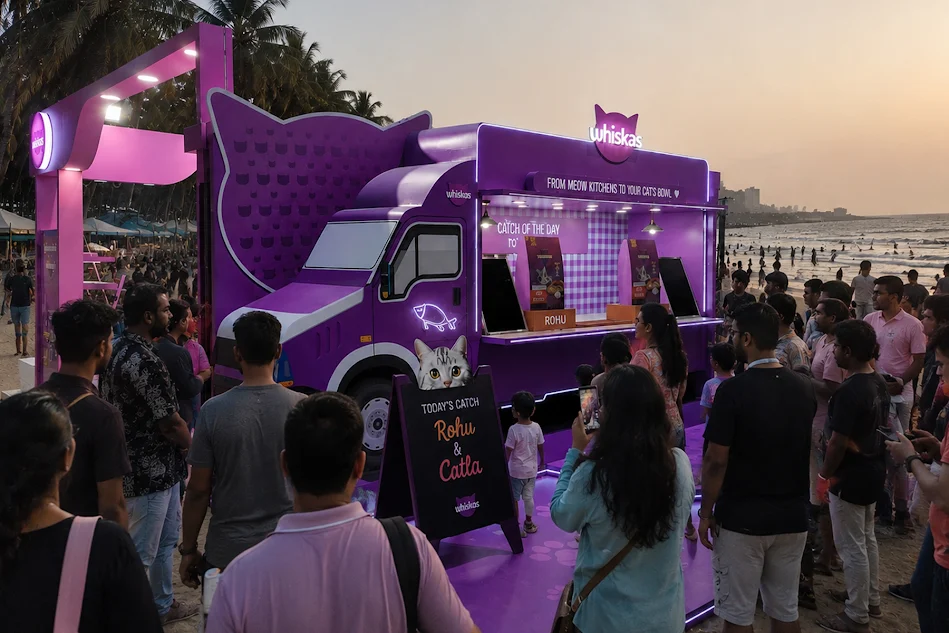
Brand activation has become an important part of modern marketing in India as brands look for more direct ways to connect with consumers. Unlike traditional advertising, on-ground brand activation gives audiences an opportunity to experience a product, interact with a brand, participate in an activity and receive a more personal brand experience.
From product launches and mall activations to roadshows, retail promotions, college campaigns, corporate activations, society activations and experiential installations, brands can select different formats according to their marketing objective and target audience.
However, successful brand activation is not simply about setting up a branded stall or deploying promoters. A professional brand activation agency in India needs to understand the audience first, identify the right location, evaluate the most effective day and timing, develop an engaging idea and then manage the complete on-ground execution.
This makes professional activation a combination of audience understanding, strategy, creative ideation, location planning, timing, production, manpower, logistics, execution and campaign measurement.
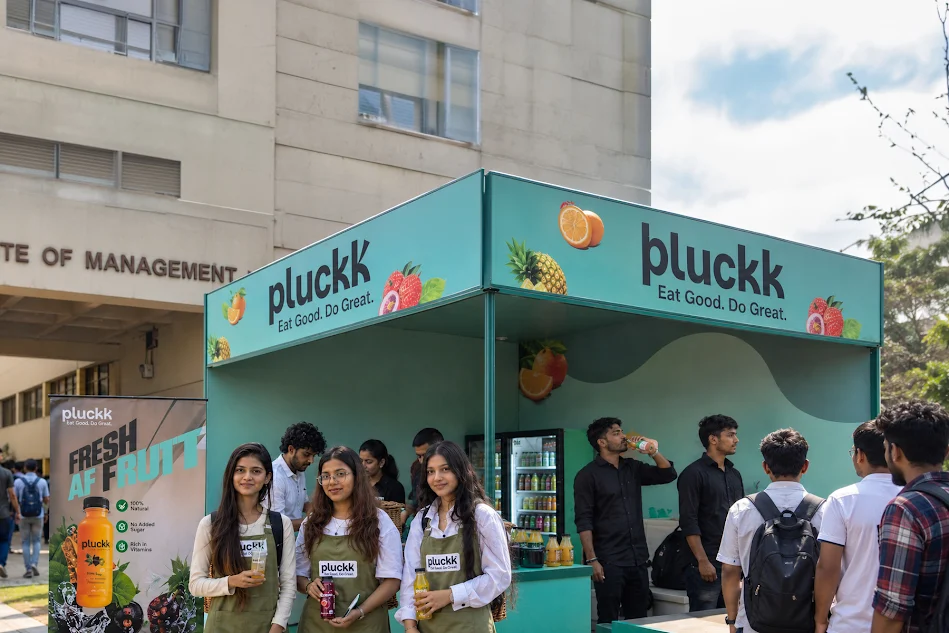
1. What Is On-Ground Brand Activation?
On-ground brand activation is a marketing approach where a brand directly interacts with its target audience through a physical or experiential campaign.
Instead of simply showing an advertisement, the audience gets an opportunity to participate in the brand experience.
Depending on the campaign objective, consumers may:
- Try a product
- Participate in a game
- Attend a product launch
- Experience a demonstration
- Receive a product sample
- Interact with brand representatives
- Visit a branded pop-up
- Participate in a roadshow
- Use an interactive technology installation
- Share their experience on social media
The objective can be brand awareness, engagement, product trial, customer education, lead generation, sales support or brand recall.
This is why businesses looking for an on-ground activation agency in India generally look for more than manpower and production support. They need an agency that can connect the creative idea with the actual audience experience.
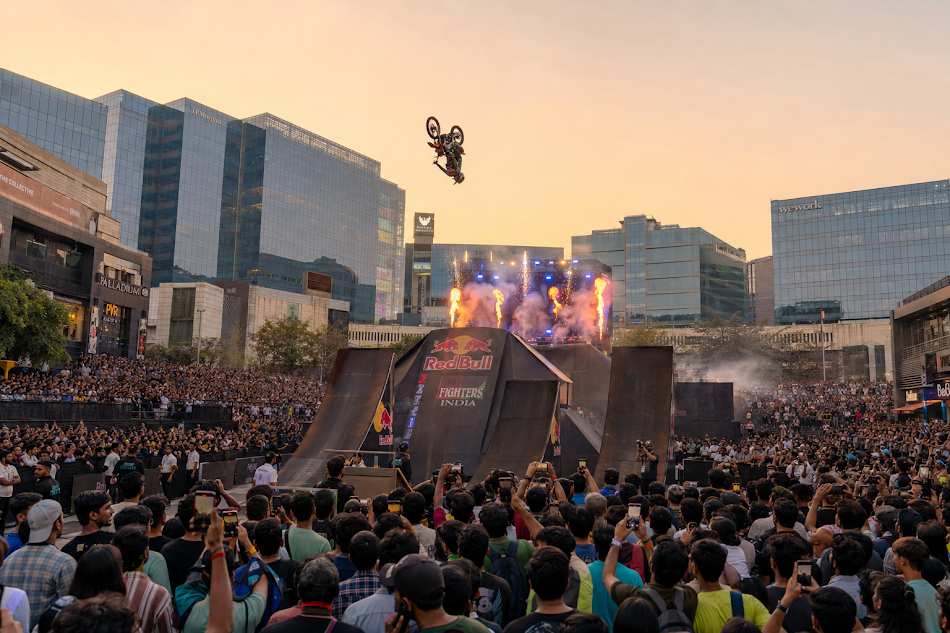
2. Why Do Brands Need On-Ground Activation Services?
Consumers are exposed to advertisements across digital platforms, television, outdoor media, social media and other channels every day.
On-ground activation offers a different type of communication because the consumer can directly interact with the brand.
For example:
- An automobile brand can display vehicles and conduct test-drive experiences.
- An FMCG company can offer product sampling.
- A technology company can demonstrate a new product or feature.
- A financial brand can create an awareness kiosk.
- A real estate company can build an interactive project experience.
- A fashion brand can create a temporary pop-up.
- An education company can conduct campus engagement activities.
The purpose is not necessarily to replace traditional advertising. Instead, brand activation can work as an experiential layer within a wider marketing campaign.
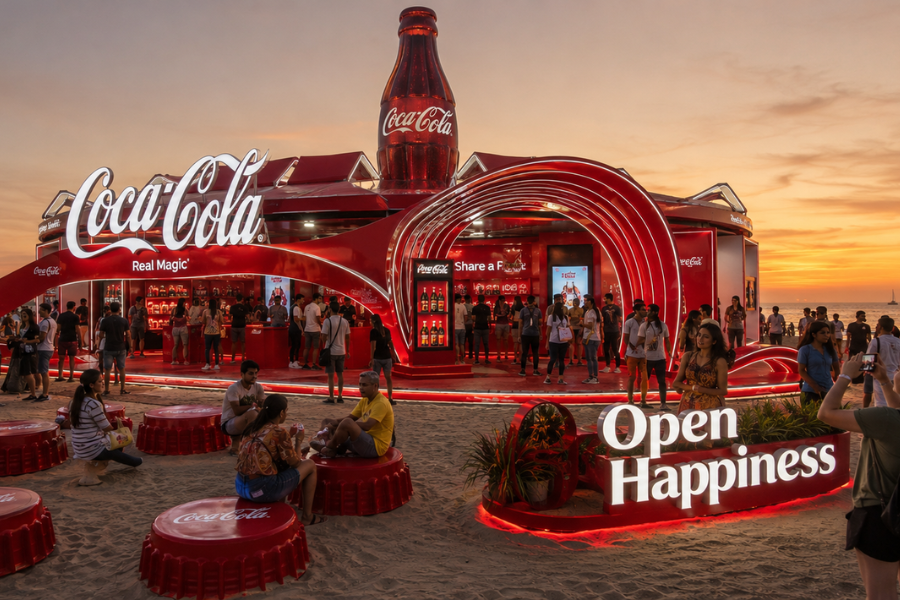
3. How Does a Brand Activation Agency Help?
A professional brand activation agency in India can manage the campaign from strategy and ideation through to execution and reporting.
A typical activation process can be structured as:
Audience → Objective → Location → Timing → Ideation → Experience → Production → Execution → Measurement
This approach helps ensure that the activation is designed around the audience rather than simply around a physical setup.
An agency may be responsible for:
- Understanding the campaign objective
- Defining the target audience
- Studying audience behaviour
- Selecting suitable locations
- Identifying suitable dates and timings
- Developing the creative concept
- Designing the physical experience
- Managing fabrication and production
- Deploying promotional manpower
- Coordinating logistics
- Managing permissions and local coordination
- Executing the activation
- Documenting the campaign
- Preparing performance reports
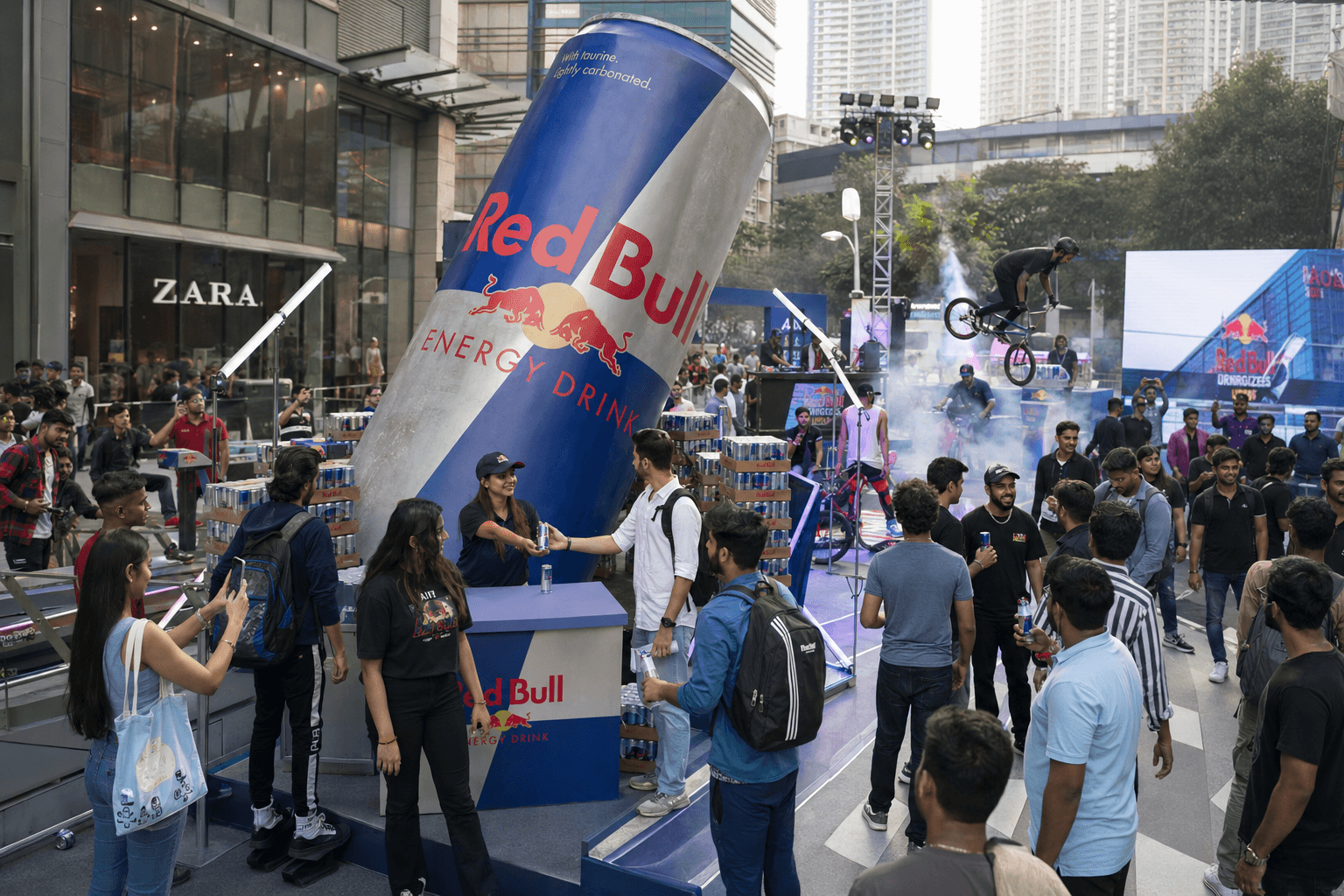
4. Why Audience Understanding Comes Before the Activation Idea
One of the most important aspects of brand activation planning is understanding the target audience before deciding what the activation should look like.
An agency should first ask:
- Who is the target customer?
- Where does this audience spend time?
- What are their interests?
- What motivates them?
- What type of experience would attract them?
- What would encourage them to participate?
- What should they remember about the brand?
A campaign targeting college students may use games, challenges, contests and social-media-friendly activities.
A campaign targeting corporate professionals may require a more convenient and professional product experience.
An FMCG campaign may benefit more from sampling and product trials.
This means the activation format should follow the audience requirement, not simply the agency’s preferred execution format.
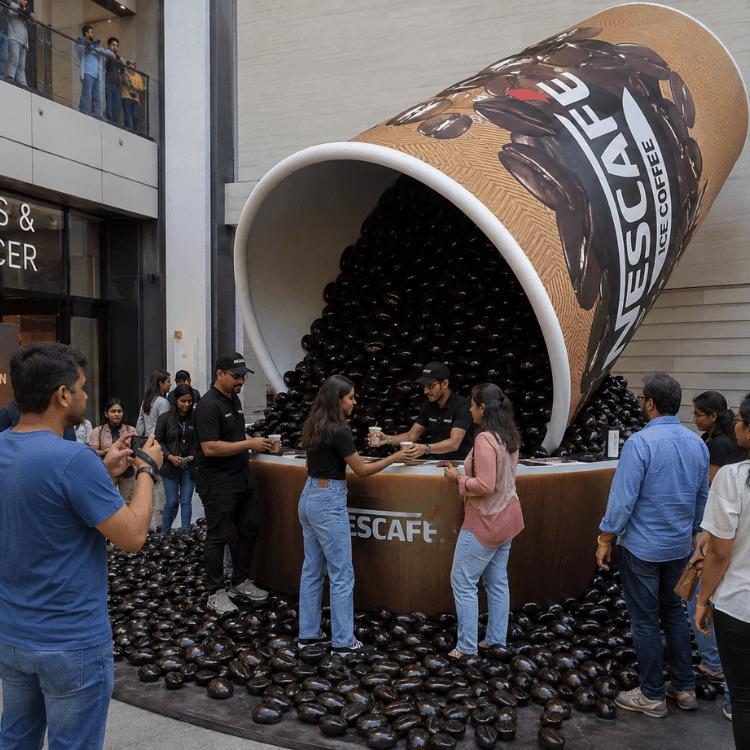
5. How Agencies Develop Creative Brand Activation Ideas
Creative ideation is one of the most valuable parts of professional activation planning.
Consumers see promotional messages every day. A standard stall, backdrop and a few promoters may provide visibility, but it may not create a memorable interaction.
A good activation agency therefore asks:
What will make people stop?
The first challenge is attracting attention.
What will make people participate?
The experience should be simple enough for the audience to understand quickly.
What will make the activity enjoyable?
An element of fun, curiosity, competition or discovery can encourage participation.
What will make people remember the brand?
The activity should have a clear connection with the brand.
What can extend the experience beyond the location?
Social sharing, content creation and digital integration can help extend an offline experience.
6. Making Brand Activation Fun and Interactive
A brand activation does not have to be complicated to become engaging.
Depending on the product and audience, agencies can use:
- Interactive games
- Quizzes
- Challenges
- Competitions
- Product trials
- Sampling
- Photo opportunities
- AR/VR experiences
- Personalization
- Rewards
- Demonstrations
- Interactive displays
- Technology-based experiences
- Surprise activities
However, entertainment should not become the only objective.
The activity should connect back to the brand, product or campaign message.
For example, if consumers remember the game but cannot remember which brand organized it, the activation has not fully achieved its marketing purpose.
7. Location Selection: Where Should the Activation Happen?
Location selection is another important service provided by a professional on-ground brand activation agency.
A location should be selected based on the target audience rather than only on total footfall.
Possible activation environments include:
- Shopping malls
- Retail outlets
- High streets
- Corporate parks
- IT hubs
- Colleges
- Universities
- Residential societies
- Supermarkets
- Airports
- Exhibitions
- Events
- Gyms
- Cafés
- Public venues
For example, a technology company targeting professionals may prefer corporate and IT environments, while an FMCG brand may prioritize retail locations, malls and residential communities.
Relevant Footfall vs Total Footfall
This is an important distinction.
A location with 20,000 visitors is not necessarily better than a location with 5,000 visitors if most of the 20,000 people do not match the target audience.
Professional activation planning therefore focuses on relevant audience presence and engagement potential.
8. Why Day and Timing Matter in Brand Activation
Choosing the right location is only part of the planning process.
The day and time of the activation can also influence audience participation.
Agencies may evaluate:
- Weekday vs weekend
- Working hours
- Lunch breaks
- Evening hours
- College schedules
- Shopping periods
- Seasonal activity
- Festivals
- Local events
- Expected audience movement
For example:
College activation: Match the campaign with student schedules.
Corporate activation: Consider office hours and employee movement.
Mall activation: Consider shopping and entertainment peaks.
Residential activation: Consider the time when families are more likely to be available.
This is why a professional activation plan should consider:
Audience + Location + Day + Time
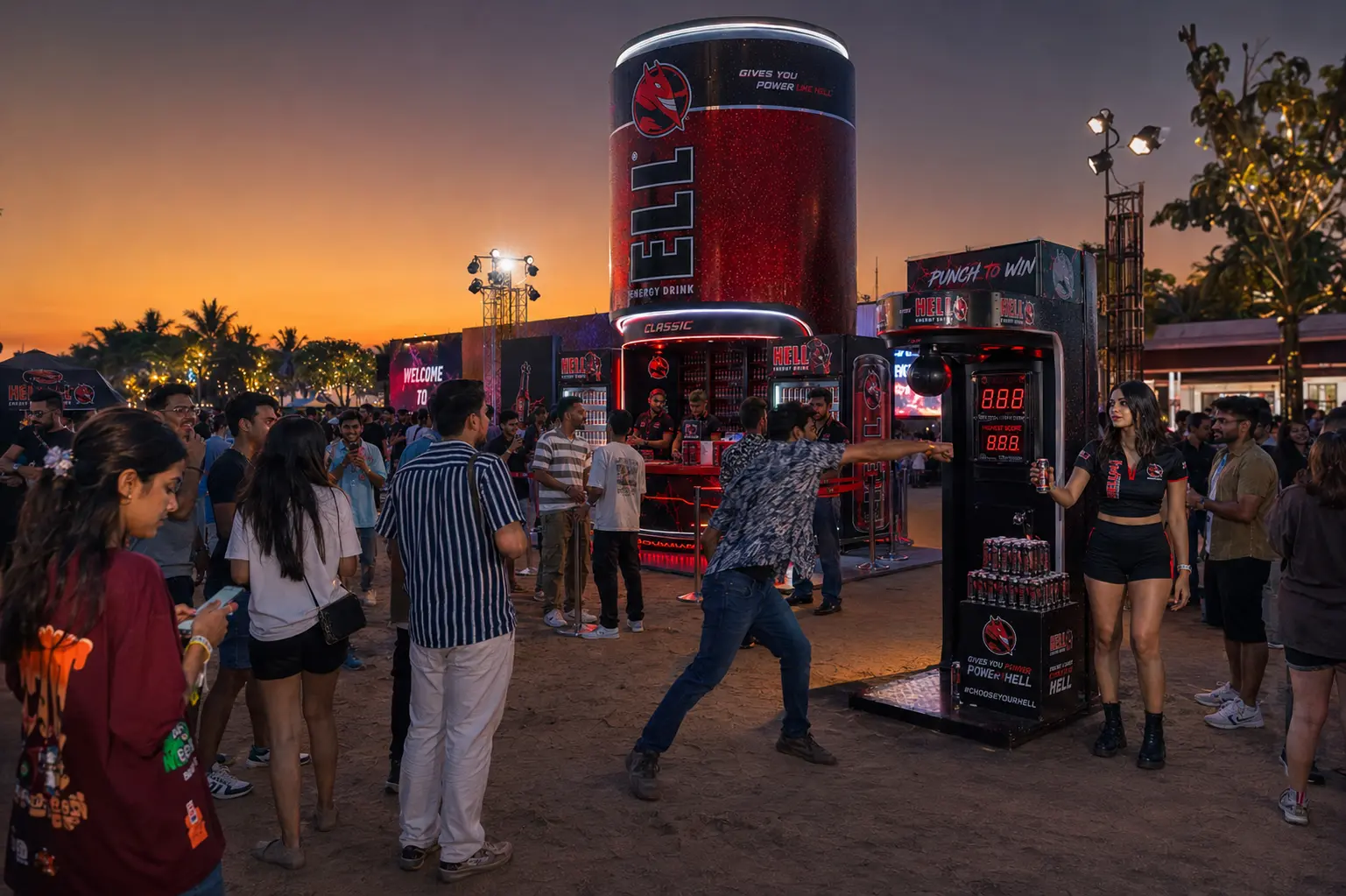
9. What Services Does an On-Ground Brand Activation Agency Provide?
A professional agency can offer different services depending on the campaign requirements.
9.1 Brand Activation Strategy
The agency studies the business objective and creates an activation approach around it.
9.2 Creative Ideation
The agency develops the central activation concept, audience interaction and experience design.
9.3 On-Ground Activation
The agency manages the physical campaign and consumer interaction.
9.4 Mall Activation
Brands can create temporary branded experiences inside shopping malls.
9.5 Retail Activation
Retail activation focuses on product trials, demonstrations and customer engagement near the point of purchase.
9.6 Product Launch Activation
New products can be introduced through product reveals, demonstrations, experience zones and consumer interaction.
9.7 Roadshow Activation
Roadshows allow brands to take their experience to multiple locations using branded vehicles, mobile units and promotional teams.
9.8 Product Sampling
Sampling allows consumers to try a product and can be particularly relevant for FMCG, food, beverage and personal care brands.
9.9 College Activation
College campaigns can use games, challenges, competitions, demonstrations and youth-focused experiences.
9.10 Corporate Activation
Corporate activations can target employees and professionals in offices, corporate parks and business districts.
9.11 Society Activation
Residential campaigns allow brands to interact with families and residents within communities.
9.12 Pop-Up Experiences
Temporary branded spaces can be created for product launches, product trials, experiential retail and limited-edition campaigns.
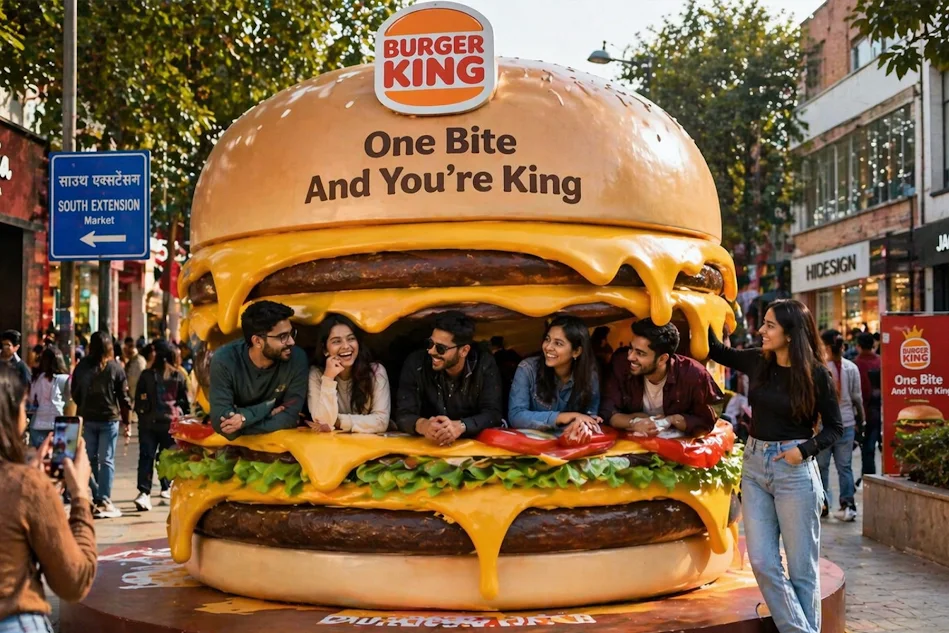
10. How Agencies Plan an On-Ground Activation Campaign
A structured campaign can be divided into several stages.
Step 1: Define the Campaign Objective
The first step is to establish what the brand wants to achieve.
Possible objectives include:
- Brand awareness
- Consumer engagement
- Product trial
- Lead generation
- Sales support
- Brand recall
- Customer education
- Market entry
Step 2: Define the Target Audience
The agency identifies who the campaign needs to reach.
Step 3: Understand Audience Behaviour
The agency considers where the audience goes, when they are available and what type of experience may encourage participation.
Step 4: Select the Location
The agency identifies locations that align with the audience profile and campaign objective.
Step 5: Select Day and Timing
Dates and timings are planned according to expected audience availability and location activity.
Step 6: Develop the Big Idea
The creative concept should be relevant, interactive, understandable, brand-connected and practical.
Step 7: Design the Experience
The idea is converted into physical elements such as:
- Kiosks
- Stalls
- Games
- Displays
- Stages
- Digital screens
- Interactive technology
- Product demonstration zones
Step 8: Manage Production
The agency coordinates:
- Fabrication
- Printing
- Branding
- AV
- Lighting
- Technology
- Signage
- Display structures
Step 9: Deploy Manpower
Depending on the campaign, manpower can include:
- Brand promoters
- Hosts
- Demonstrators
- Supervisors
- Technicians
- Coordinators
- Event managers
Step 10: Execute the Activation
The agency manages setup, audience engagement, logistics, supervision and campaign coordination.
Step 11: Measure and Report
Campaign reporting can include:
- Footfall
- Interactions
- Product trials
- Samples distributed
- Registrations
- Leads
- Participation
- Social engagement
- Content generated
- Audience feedback
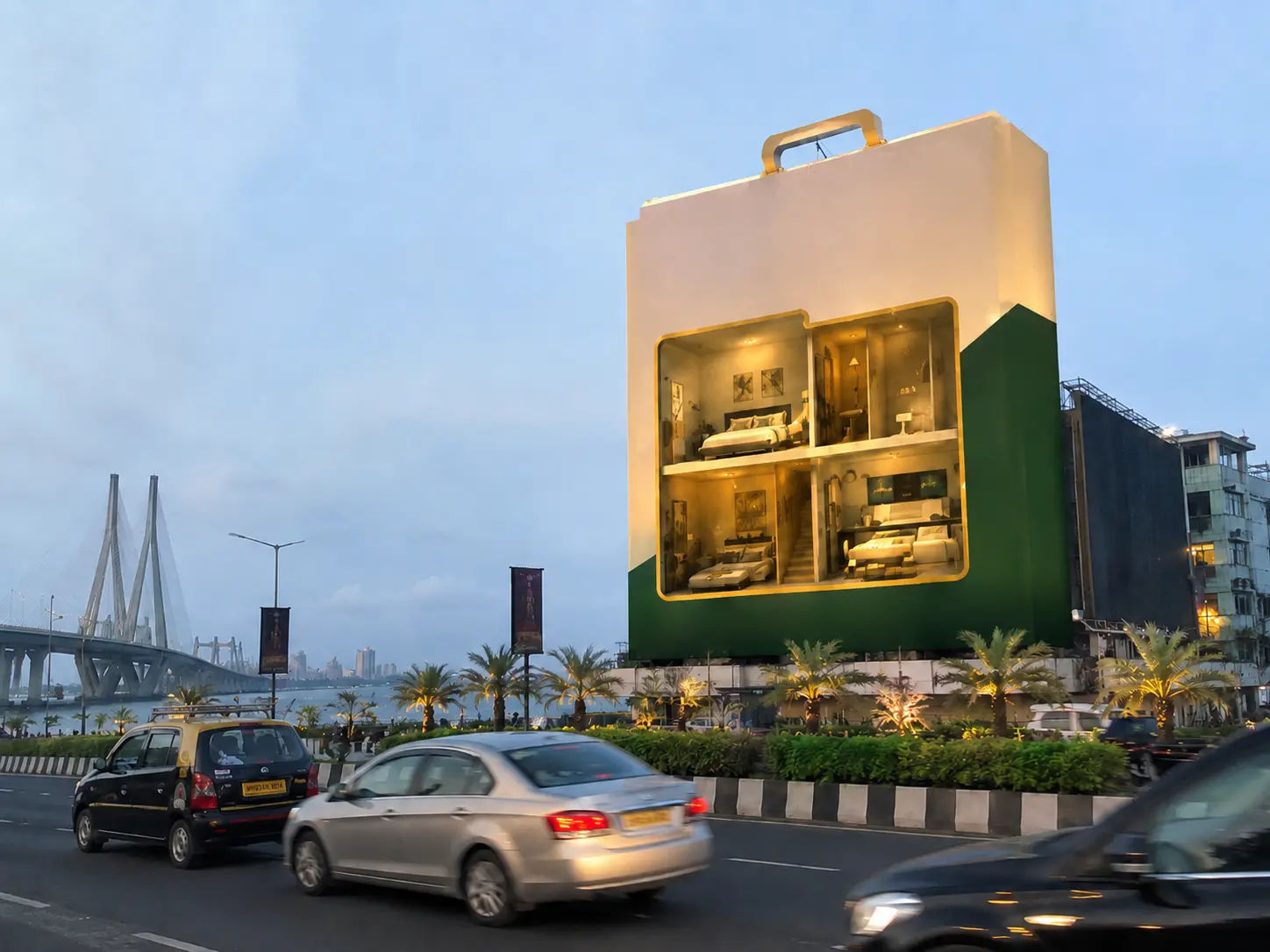
11. Top Agencies for On-Ground Brand Activation in India
If a brand is researching brand activation agencies in India, it is useful to compare agencies according to their service capabilities, creative approach, geographic coverage and campaign requirements.
11.1 Trzy Innovationz
Trzy Innovationz focuses on brand activation, experiential marketing, BTL campaigns and on-ground brand experiences.
Its activation services can include:
- On-ground brand activation
- BTL activation
- Experiential marketing
- Product launch activation
- Mall activation
- Retail activation
- Roadshows
- Society activation
- Corporate activation
- Product sampling
- Promotional manpower
- Fabrication and production
- Multi-city execution
For brands looking for an agency that can combine creative planning and on-ground campaign execution, Trzy Innovationz can be evaluated according to the campaign scope.
11.2 Experiential Marketing Agency
Experiential Marketing Agency focuses on physical brand experiences designed to encourage direct interaction between consumers and brands.
Its potential activation formats include:
- Brand activations
- Experiential marketing
- Mall activations
- Retail promotions
- Product launches
- Roadshows
- Product demonstrations
- Sampling campaigns
- Interactive experiences
- Consumer engagement
This type of service can be useful for brands that want to create a more experience-led campaign instead of relying only on conventional promotional displays.
11.3 Experiential Trzy
Experiential Trzy works around experiential marketing, BTL activation, brand promotion and on-ground experiences.
Its campaign formats can include:
- Brand activation
- BTL activation
- Mall activation
- Product launches
- Roadshows
- Mobile promotions
- Product sampling
- Experiential campaigns
- Consumer engagement
- Event fabrication
11.4 Experiential in India
Experiential in India focuses on experiential marketing and physical brand experiences designed to connect brands with their target audiences.
Depending on the campaign, services can include:
- Experiential brand activations
- On-ground campaigns
- Product demonstrations
- Consumer engagement
- Brand experience zones
- Product launches
- Retail experiences
- Roadshow campaigns
- Promotional activities
- Interactive installations
Brands can evaluate Experiential in India based on their campaign objective, audience, location requirements and desired experiential format.
11.5 CupShup
CupShup focuses on direct consumer engagement through targeted activation campaigns across environments such as corporate offices, colleges and residential communities.
Its activation formats can include:
- Corporate campaigns
- College activations
- Society activations
- Product sampling
- Product trials
- Hyperlocal campaigns
- Consumer engagement
11.6 Play Experiential
Play Experiential operates in experiential marketing and on-ground brand activation.
Its campaign formats can include:
- Mall activations
- Retail activations
- Pop-ups
- Product sampling
- College activations
- Youth campaigns
- Roadshows
- City activations
- Consumer experiences
11.7 Advan
Advan provides BTL and ground activation services for brands looking for customized consumer engagement.
Services can include:
- Ground activation
- BTL activation
- Retail activation
- In-store activation
- Brand activation strategy
- On-ground execution
11.8 Fiona Premium Events
Fiona Premium Events focuses on experiential campaigns, brand activations, pop-ups, roadshows and on-ground experiences.
Its service areas can include:
- Brand activations
- Experiential launches
- Pop-ups
- Multi-city roadshows
- Audience engagement
- Experiential design
- On-ground campaigns
- Campaign amplification
12. Industries That Use On-Ground Brand Activation
Brand activation can be customized for different industries.
| Industry | Main Objective | Common Activation Services |
| FMCG | Product awareness and trial | Sampling, demonstrations, games |
| Automobile | Product experience | Vehicle displays, test drives |
| Technology | Product education | Live demonstrations, interactive zones |
| Banking & Finance | Customer awareness | Information kiosks, engagement |
| Real Estate | Project promotion | Experience zones, property showcases |
| Education & EdTech | Student engagement | Campus activations, counselling |
| Healthcare | Awareness and education | Information campaigns |
| Retail | Customer engagement | Mall and retail activations |
| Food & Beverage | Product trial | Sampling, tasting, games |
| Fashion | Collection promotion | Pop-ups, showcases |
| Telecom | Product and service promotion | Mobile activations |
| Consumer Electronics | Product demonstration | Interactive displays |
| EV & Energy | Technology awareness | Vehicle demonstrations |
| Travel & Tourism | Destination promotion | Experiential zones |
| Insurance | Customer education | Information and engagement campaigns |
13. How to Choose the Best Brand Activation Agency in India
There is no single agency that is automatically the best for every campaign.
The right choice depends on the objective, audience, location, budget, geographic requirements and desired experience.
Before selecting an agency, brands can evaluate the following:
13.1 Relevant Experience
Check whether the agency has handled campaigns similar to your industry and objective.
13.2 Creative Capability
Ask whether the agency can develop a fresh concept instead of repeating standard activation formats.
13.3 Audience Understanding
A strong agency should ask questions about the target audience before proposing an execution.
13.4 Location Planning
Check whether the agency can recommend locations based on relevant audience presence.
13.5 Timing Strategy
The agency should be able to consider suitable days and timings rather than simply selecting available dates.
13.6 Production Capability
Evaluate its ability to manage fabrication, branding, AV, technology and physical experience requirements.
13.7 Manpower
Check whether trained promoters, hosts, supervisors and technical teams can be provided.
13.8 Geographic Coverage
For multi-city campaigns, confirm whether the agency can coordinate execution across the required markets.
13.9 Logistics
Roadshows and multi-location activations require organized movement of people, vehicles, materials and equipment.
13.10 Reporting
Ask what campaign data and documentation will be provided after execution.
14. Brand Activation vs Traditional Advertising
| Traditional Advertising | On-Ground Brand Activation |
| Mainly communicates a message | Creates a physical brand experience |
| Mostly one-way communication | Encourages interaction |
| Media-led | Experience-led |
| Strong focus on reach | Strong focus on engagement |
| Limited physical interaction | Direct consumer interaction |
| Feedback may be indirect | Audience response can be observed directly |
The two approaches can work together.
For example, a brand can use digital and outdoor advertising to create awareness and then use on-ground brand activation to allow consumers to experience the product.
15. What Makes an On-Ground Activation Successful?
The biggest setup does not always create the best campaign.
A successful activation depends on the relationship between:
Audience + Objective + Location + Timing + Idea + Experience + Brand + Measurement
Audience
Who needs to participate?
Objective
What should the campaign achieve?
Location
Where can the relevant audience be reached?
Timing
When are they most likely to engage?
Idea
What will make them stop?
Experience
What will make them participate?
Brand
What will make them remember the company?
Measurement
How will the campaign’s success be evaluated?
When these elements work together, an activation becomes a strategic brand experience rather than simply an event setup.
16. Common Mistakes in On-Ground Brand Activation
Mistake 1: Choosing Footfall Instead of Relevant Audience
A large crowd does not automatically mean valuable engagement.
Mistake 2: Starting With the Setup
The campaign should begin with the audience and objective—not the question of what structure to build.
Mistake 3: Ignoring the Day and Timing
An otherwise strong campaign can underperform when the audience is unavailable.
Mistake 4: Making the Experience Too Complicated
People should understand the activation quickly.
Mistake 5: Making Entertainment More Important Than the Brand
The activity should reinforce the brand rather than distract from it.
Mistake 6: Not Measuring Results
Without reporting, the brand cannot properly evaluate campaign performance.
17. Why Work With a Professional On-Ground Activation Agency?
A professional agency can bring multiple campaign requirements together under one strategy.
Instead of separately coordinating designers, fabricators, promoters, logistics providers, technology vendors and production teams, brands can work with an agency that manages the activation as an integrated campaign.
Depending on the project, an agency can provide:
- Audience understanding
- Activation strategy
- Creative ideation
- Location planning
- Timing strategy
- Experience design
- Fabrication
- Branding
- Technology
- Promotional manpower
- Permissions
- Logistics
- On-ground execution
- Campaign reporting
This is particularly useful when brands are planning multi-city or pan-India brand activation campaigns.
18. Final Thoughts
On-ground brand activation is no longer simply about putting a branded structure in a busy location. It is about creating a relevant experience for the right audience at the right place and time.
A professional brand activation agency in India should therefore contribute more than execution. The agency should understand the audience, campaign objective, location, timing and brand message before developing the activation concept.
The most effective campaigns are not necessarily the largest or most expensive. They are the ones that give consumers a genuine reason to stop, participate, experience and remember the brand.
For businesses researching brand activation agencies in India, on-ground activation companies, BTL agencies and experiential marketing agencies, names such as Trzy Innovationz, Experiential Marketing Agency, Experiential Trzy and Experiential in India can be evaluated along with other providers based on their relevant experience, creative capabilities, geographic coverage, production infrastructure and execution requirements.
Ultimately, successful activation comes down to one simple principle:
Understand the audience first. Create the right experience second. Execute it properly third.
Frequently Asked Questions About On-Ground Brand Activation
1. What does an on-ground brand activation agency do?
An on-ground brand activation agency plans and executes physical marketing campaigns such as product launches, mall activations, roadshows, product sampling, retail promotions, college activations, corporate campaigns and experiential experiences.
2. What are on-ground brand activation services?
On-ground brand activation services include strategy, creative ideation, location planning, fabrication, branding, promotional manpower, product demonstrations, sampling, technology, logistics and campaign execution.
3. Why is audience research important for brand activation?
Audience research helps agencies determine the appropriate activation idea, location, day, timing and engagement format. It helps ensure that the campaign is relevant to the people the brand wants to reach.
4. How do agencies select an activation location?
Agencies can evaluate the target audience, location profile, accessibility, expected footfall, relevance, venue requirements and campaign objective before recommending a location.
5. Does the day and time affect activation performance?
Yes. Audience availability varies by location and audience type. College, corporate, retail and residential campaigns can all require different schedules.
6. What types of brand activation campaigns are available?
Common formats include mall activation, retail activation, product launch activation, roadshows, product sampling, college activation, corporate activation, society activation and pop-up experiences.
7. Which industries use on-ground activation?
FMCG, automobile, technology, banking, healthcare, education, real estate, retail, food and beverage, fashion, telecom, consumer electronics, EV, tourism and lifestyle brands can use on-ground activation.
8. What is the difference between BTL and brand activation?
BTL is a broader category of targeted marketing activities. Brand activation specifically focuses on creating direct interaction and experiences between the consumer and the brand.
9. Can brand activation agencies execute campaigns across India?
Yes. Agencies can plan campaigns for individual cities, multiple locations or pan-India markets, depending on their geographic coverage and execution capabilities.
10. How should I choose a brand activation agency in India?
Compare agencies based on relevant experience, audience understanding, creative ideation, location planning, production capability, manpower, geographic coverage, logistics, execution quality and campaign reporting.
Know More:- Brand activation services